Ball Valve Flow Direction For Dummies

George Packard
Vice President of Marketing
Read Full Bio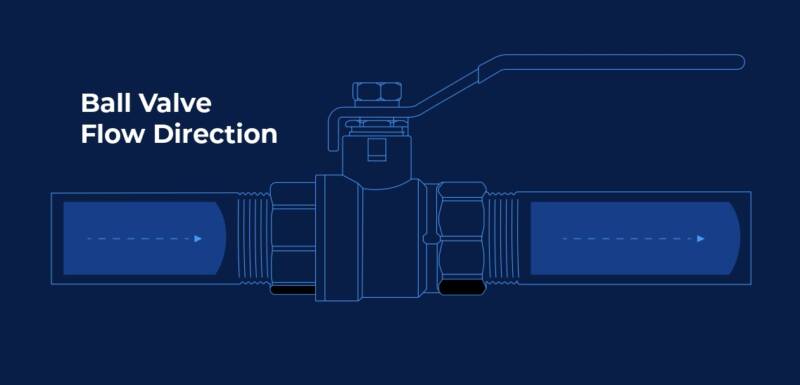
Installing a ball valve might seem straightforward…that is, until flow direction gets ignored. In some systems, direction doesn’t matter. In others, getting it wrong can lead to leaks, pressure issues or valve failure.
This guide breaks down when flow direction matters, how to identify it and what to know before installation.
What Is Ball Valve Flow Direction?
Flow direction in a ball valve refers to the path media takes as it enters and exits the valve. Depending on the valve’s internal design, that path may be restricted to a single direction or allowed to reverse.
Ball valves operate using a quarter-turn mechanism. Inside the valve body, a spherical ball with a central port aligns with the flow path when open and rotates perpendicular to stop flow when closed. The orientation of the handle mirrors the ball’s position:
- Handle parallel to the pipeline = valve is open
- Handle perpendicular = valve is closed
In some designs, flow can travel in either direction with no impact on function. In others, the valve is built to handle pressure and seal in one direction only. Misaligning the valve with system flow can result in:
- Internal pressure buildup
- Compromised sealing
- Reduced flow efficiency
- Valve seat damage
Understanding how flow direction relates to valve design helps ensure correct installation and performance, especially in systems handling higher pressure, extreme temperatures or specialized media.
Unidirectional vs. Bidirectional Ball Valves
Ball valves fall into two primary categories based on how they manage flow: unidirectional and bidirectional. The right choice depends on the application, media and system layout. Understanding the differences helps prevent incorrect installation and performance issues.
Unidirectional Ball Valves
Flow Capability
Unidirectional valves allow media to flow in one direction only. These valves are designed with sealing elements that support a specific flow path — from inlet to outlet — and are not meant to function if the flow is reversed.
Common Applications
These valves are used where flow must be restricted to a single direction, such as in backflow prevention systems, high-pressure lines or installations handling hazardous media. One-way flow is critical in systems where safety, pressure relief or process integrity must be tightly controlled.
Design Characteristics
Unidirectional valves typically feature asymmetrical seat design. The seats are engineered to create a seal only on the downstream side of the valve, making correct orientation during installation critical. Some models include cavity relief features or pressure relief holes that only function when installed in the intended flow direction.
Identification Methods
Most unidirectional ball valves are marked with a flow arrow on the valve body. This indicator shows the correct direction for media flow. In some cases, internal inspection may reveal seat geometry that confirms directionality.
Installation Considerations
Incorrect installation of a unidirectional valve can lead to ineffective sealing, internal damage or failure to relieve pressure. Always verify the arrow or consult manufacturer documentation before placing the valve in service.
Bidirectional Ball Valves
Flow Capability
Bidirectional valves support flow in either direction. These valves are designed to perform reliably regardless of the media’s entry or exit point, making them well-suited for applications with variable flow paths or where flow direction is not fixed.
Common Applications
Bidirectional ball valves are widely used in water distribution, HVAC systems and general-purpose isolation applications. Their design flexibility simplifies the system layout and allows for easier changes during maintenance or retrofits.
Design Characteristics
Unlike unidirectional valves, bidirectional valves feature symmetrical seat construction. This allows both sides of the ball to seal against flow equally. They typically do not include pressure relief features, making them suitable for balanced or lower-pressure systems.
Identification Methods
These valves often lack directional markings, as orientation doesn’t affect sealing. The handle still functions as a visual indicator of valve status: aligned with the pipe when open, perpendicular when closed.
Installation Considerations
Because flow direction doesn’t impact function, bidirectional valves are easier to install in a variety of layouts. However, they may not offer the same sealing reliability in high-pressure or backflow-sensitive systems.
When Flow Direction Matters — and When It Doesn’t
Not every ball valve application requires strict attention to flow direction. But in the cases where it does, ignoring it can compromise the performance of the entire system.
When Direction Matters
1. Using a Unidirectional Valve
Unidirectional valves are built to seal in one direction only. Installing them backward can cause the valve to leak or fail to relieve pressure properly. This is particularly important in systems using pressure relief seats or cavity relief features that only function with proper orientation.
2. Managing Pressure Differentials
In high-pressure systems, media moving in the wrong direction against a unidirectional valve’s sealing side can degrade the seat material or force internal leakage. Directional flow helps maintain control over pressure transitions, especially during shut-off.
3. Handling Specific Media Types
Flow direction matters in systems using steam, chemicals or food-grade liquids. These applications may involve directional flushing, contamination control or specific requirements for drainage and cleaning. A reversed valve can trap media or prevent proper cleaning, risking contamination or safety violations.
4. Protecting Equipment Downstream
Directional valves are often used to prevent backflow into sensitive equipment, such as pumps, meters or sensors. Allowing reverse flow, even momentarily, can cause damage or incorrect readings.
When Direction May Not Matter
1. Low-Pressure, General Use Applications
In residential plumbing or low-pressure utility systems, bidirectional valves often perform well regardless of how they are installed. Directional sealing isn’t typically needed in these environments.
2. Systems with Reversible Flow
Piping layouts that allow flow to change direction, either by design or due to system cycling, benefit from bidirectional valves. Their symmetrical design eliminates concerns about orientation.
3. Manual Isolation Valves
When the valve is used simply to start or stop flow in both directions and sealing pressure is relatively balanced, flow direction isn’t a factor. Standard bidirectional valves are typically selected for this role.
How to Identify Flow Direction
Before installing a ball valve, it’s important to verify how it’s designed to handle flow. Some valves offer visual indicators, while others may require checking documentation or internal components.
1. Check the Valve Body for Markings
Many unidirectional ball valves include an arrow cast or etched into the body. This arrow shows the intended direction of flow from inlet to outlet. If this marking is present, it should always be your first reference.
2. Use the Handle Position as a Clue (for Open/Closed Status)
While the handle primarily indicates whether the valve is open or closed, its orientation can also help identify flow direction:
- Open position: Handle is inline with the pipe — media flows through.
- Closed position: Handle is perpendicular to the pipe — media is blocked.
Note: Handle orientation alone does not confirm directionality. It should only be used in combination with body markings or manufacturer guidance.
3. Review Manufacturer Documentation
Product manuals, spec sheets or install guides often indicate whether a valve is unidirectional or bidirectional. These documents may include diagrams, flow paths and other installation notes. Gemini Valve manuals provide this information for each valve series.
4. Inspect Internals (if accessible)
If markings are missing and documentation isn’t available, disassembling the valve (or reviewing a sectional drawing) can help. Asymmetrical seat design is typical for unidirectional valves. A relief hole on the ball or one-sided sealing surface also indicates one-way flow. Note that many ball valves are not intended to be disassembled and doing so may void the manufacturer’s warranty.
5. Don’t Assume, Always Confirm
Visual inspection or guesswork can lead to incorrect installation. Always verify the flow direction using reliable references before placing the valve into service.
Installation Best Practices
Correct installation of a ball valve helps ensure reliable performance, long service life and system safety. The following best practices apply to both unidirectional and bidirectional valves but are especially important when flow direction matters.
1. Verify Valve Type Before Installation
Check if the valve is unidirectional or bidirectional. Use any available documentation, labeling or flow arrows. For unidirectional valves, make sure the indicated flow direction matches the actual system flow.
2. Confirm Alignment with Piping Layout
Install the valve so that its orientation fits the intended flow path. If using an actuator or manual lever, ensure the control mechanism allows easy operation and clearly shows open/closed positions.
3. Use Appropriate Sealing Techniques
When using threaded ball valves, apply approved thread sealant or Teflon tape to male threads only. Avoid excess application, which can interfere with assembly or break off inside the system.
4. Avoid Over-Tightening
Apply torque evenly and within the valve’s specified limits. Over-tightening can distort the valve body or damage internal seals, particularly with brass or stainless steel bodies.
5. Conduct a Pressure Test Post-Installation
Before putting the system into full service, perform a pressure test to confirm that there are no leaks at the valve body, stem or connections. This step is especially important in high-pressure or hazardous applications.
6. Follow Model-Specific Guidelines
It’s always a good idea to consult the manufacturer of the ball valve you are installing, this helps ensure you follow the best practices for the specific valve design.
Common Mistakes and How to Avoid Them
Even experienced installers can overlook key details during valve setup. These mistakes can compromise performance, shorten valve lifespan or introduce safety risks.
1. Incorrect Valve Orientation
Installing a unidirectional valve against its intended flow direction is one of the most common — and costly — errors. This can prevent proper sealing, cause pressure buildup or trigger downstream failures.
How to avoid it: Always locate and follow the flow direction marking or consult manufacturer documentation.
2. Using the Wrong Valve Type
Using a unidirectional valve in a system that is designed to accommodate flow in both directions, or vice versa, can result in malfunction. This often happens when valve selection is rushed or based on appearance alone.
How to avoid it: Confirm the valve’s directional capability during the selection process, not after installation.
3. Over-Tightening During Assembly
Over-torquing threads or fittings can damage the valve body or compromise internal seals, especially in valves with softer materials or precision-machined components.
How to avoid it: Use a calibrated torque wrench and follow torque specs from the manufacturer.
4. Improper Alignment with the System
If the valve is not installed square to the piping or if the actuator is mounted at an awkward angle, it can lead to operational issues or early wear on the stem and seals.
How to avoid it: Align the valve body and controls carefully with the system layout.
5. Skipping Maintenance on High-Cycle Valves
In high-use systems, seals can degrade or accumulate debris over time. Without regular checks, performance will decline and failures can go unnoticed.
How to avoid it: Set a preventive maintenance schedule, especially for actuated or automated valves.
6. Neglecting Documentation
Assuming a valve is bidirectional because it looks symmetrical, or guessing at torque values or installation orientation, can lead to critical failures.
How to avoid it: Always refer to product documentation or consult the valve manufacturer before installing or servicing.
Impact on System Efficiency
Flow direction plays a direct role in how well a system functions. A misaligned or mismatched valve can disrupt pressure, reduce efficiency and shorten component life.
1. Flow Rate and Cv Performance
The valve’s flow coefficient (Cv) measures the flow capacity at a specific pressure. If a unidirectional valve is installed in the wrong orientation, flow may be restricted. This can cause pressure drops, reduce throughput and increase the load on pumps and related equipment.
2. Backflow Prevention and System Protection
In applications where backflow is a concern, such as chemical processing or clean water systems, directional sealing helps protect downstream components. When a valve is installed incorrectly, media can flow in the unintended direction, potentially causing contamination or equipment failure.
3. Seal Wear and Energy Use
When a valve faces pressure from the wrong direction, it puts uneven stress on the seats. Over time, this accelerates wear and increases the chance of internal leakage. It can also lead to higher energy use as pumps work harder to maintain flow and pressure.
4. Safety Considerations in Pressurized Systems
High-pressure systems require correct valve orientation to ensure safe operation. A valve with a downstream relief design must be aligned correctly to handle excess pressure safely. Improper installation could compromise containment.
5. Application Example: Performance Automation Series
Gemini’s Performance Automation Series is built for long-term, reliable operation in high-cycle environments. Proper installation ensures optimal sealing and flow, helping reduce maintenance and preserve system efficiency.
Why Choose Gemini Valve?
For applications where flow direction matters, reliable valve performance begins with the right design and the right partner. Gemini Valve specializes in compact, U.S.-manufactured ball valves engineered for precision and durability.
What sets us apart:
- U.S.-Based Design and Manufacturing: Our valves are designed, machined, assembled and tested in-house to ensure consistent quality and fast delivery.
- Engineered for Compact Applications: We focus on ball valves 2 inches and under, making our solutions ideal for tight installations and automated systems.
- Support for Custom Flow Requirements: Whether your system needs unidirectional sealing or bidirectional flexibility, our engineers can help configure the right solution.
- Trusted Across Industries: From OEMs to facility managers, customers rely on Gemini for leak-tight sealing, dependable automation and lasting performance.
Need help choosing the right ball valve for your next project?
Download our free guide, 15 Factors to Consider Before Your Next Industrial Ball Valve Order. It covers how to define your specifications, what questions to ask suppliers and how to avoid common missteps during selection.
Ball Valve Flow Direction FAQs
Is there a flow direction on ball valves?
Some ball valves are directional, and others are not. Unidirectional valves have a designated flow path, often marked with an arrow or indicator on the valve body. Bidirectional valves are designed to seal and operate regardless of flow direction.
Are ball valves unidirectional or bidirectional?
Ball valves can be either. Unidirectional valves allow flow in one direction only and are used in systems that require controlled or isolated flow. Bidirectional valves support flow in both directions and are commonly used in general-purpose applications.
How do you know which way a valve flows?
Check for flow direction indicators on the valve body, such as cast arrows or tags. If no markings are present, refer to the product documentation or inspect the internal design. The orientation of the seats or seals may suggest directionality.
Which way do you turn a ball valve handle?
To open the valve, turn the handle until it is aligned with the pipe. To close it, turn the handle perpendicular to the pipe. This quarter-turn motion is standard for manual ball valves.
George Packard
Vice President of Marketing
George Packard, Vice President of Marketing at Gemini Valve, has been involved in Technical Sales and Marketing in the valve industry for over 10 years. George’s varied experience includes communicating with clients to troubleshoot critical applications, and working alongside top engineers in the industry to promote the latest innovations in automated ball valve design.
15 Factors to Consider Before Your Next Industrial Ball Valve Order
This guide includes everything you need to know before placing your next industrial ball valve order.