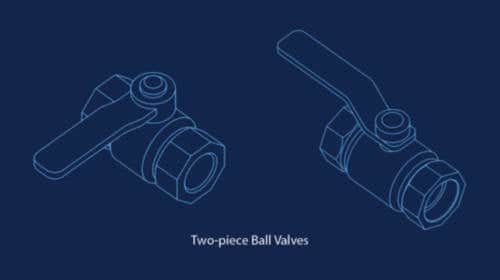
Gate Valves vs. Ball Valves: How to Pick the Right On/Off Valve for Your Application

George Packard
Vice President of Marketing
Read Full Bio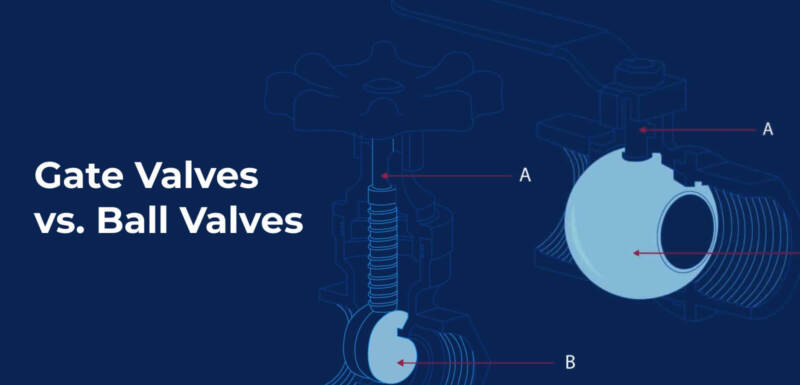
Gate valves and ball valves approach on/off control in fundamentally different ways. A gate valve relies on a rising or descending barrier that blocks or clears the flow path, whereas a ball valve uses a rotating sphere with a bored opening to create a smooth, direct passage when aligned, or a complete stop when turned.
Those mechanisms influence how each valve behaves under pressure, how quickly it can cycle and how well it maintains a seal. As a result, gate valve applications often involve slow, steady actuation, while ball valve applications support fast on/off control and tight shutoff across a range of media.
What is a Gate Valve?
Gate valves are used to completely stop or start the flow of fluid through a pipeline by lifting or lowering a solid, rectangular gate. These valves consist of a valve body, seat, disc, spindle, gland and actuator.
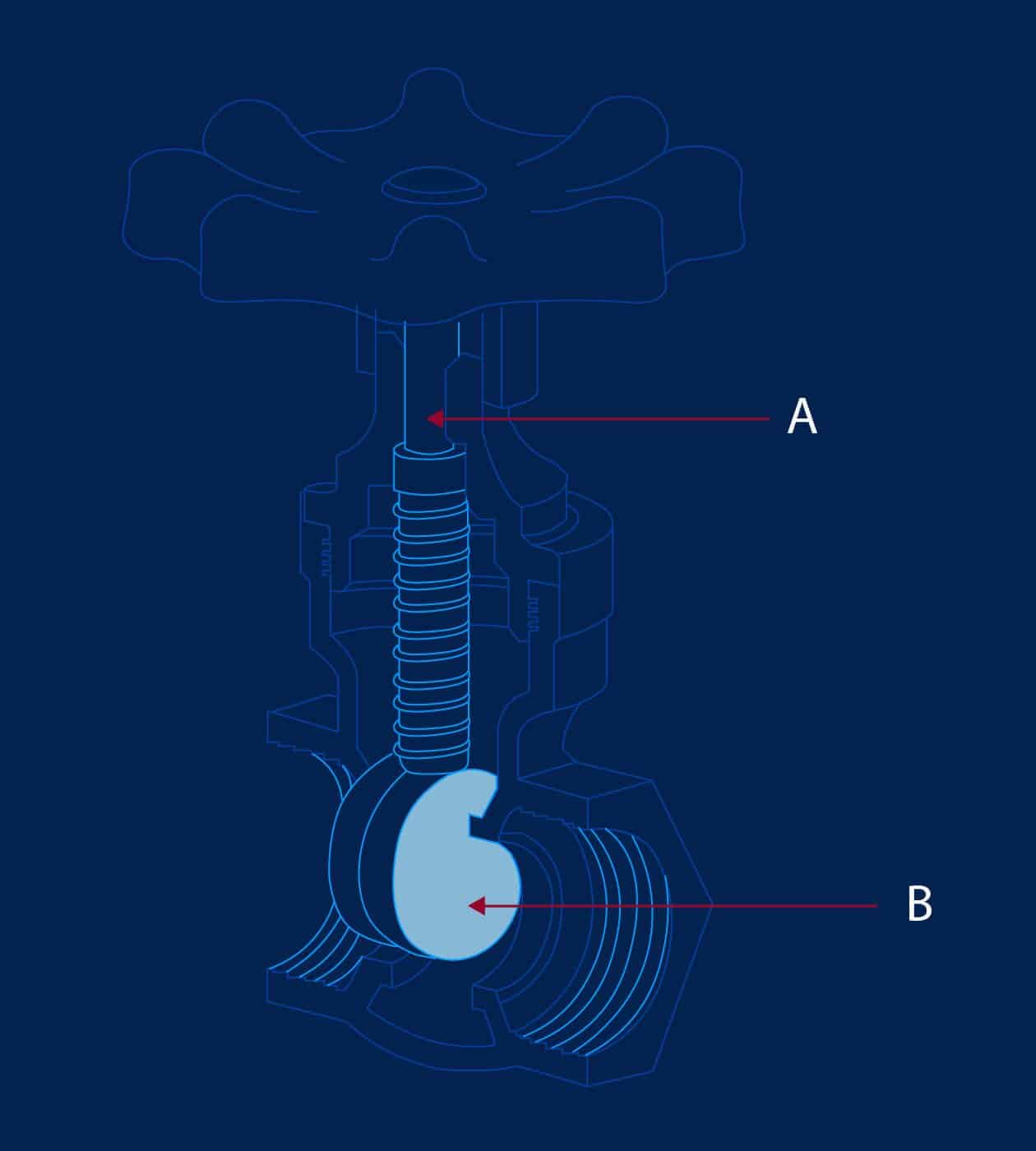
Gate valves are not used to regulate flow — they are designed to be fully open or fully closed. These valves are slower than quarter-turn valves (like ball valves) because they require more than a 360° turn to change the position of the gate, whereas a ball valve requires only a 90° turn to cycle from open to closed or vice-versa. Because of this, gate valves may not be the best choice for applications that require frequent operation or fast cycle times. Gate valves are most commonly controlled by a manual handwheel, but electric and pneumatic actuation options are also available.
What Is a Ball Valve?
While a solid rectangular gate controls the flow of media through a gate valve, a ball valve relies on a pivoting ball to control the flow of liquid or gas. The ball has a bore (or hole) in it that the media passes through, and its position indicates whether the valve is open or closed.
Ball valves can be designed with multiple openings, also known as ports. Two-way ball valves have two ports and are used for basic on/off control. There are also multi-port valves that are used in applications that need to divert media in different directions or that may require more than one source of media.
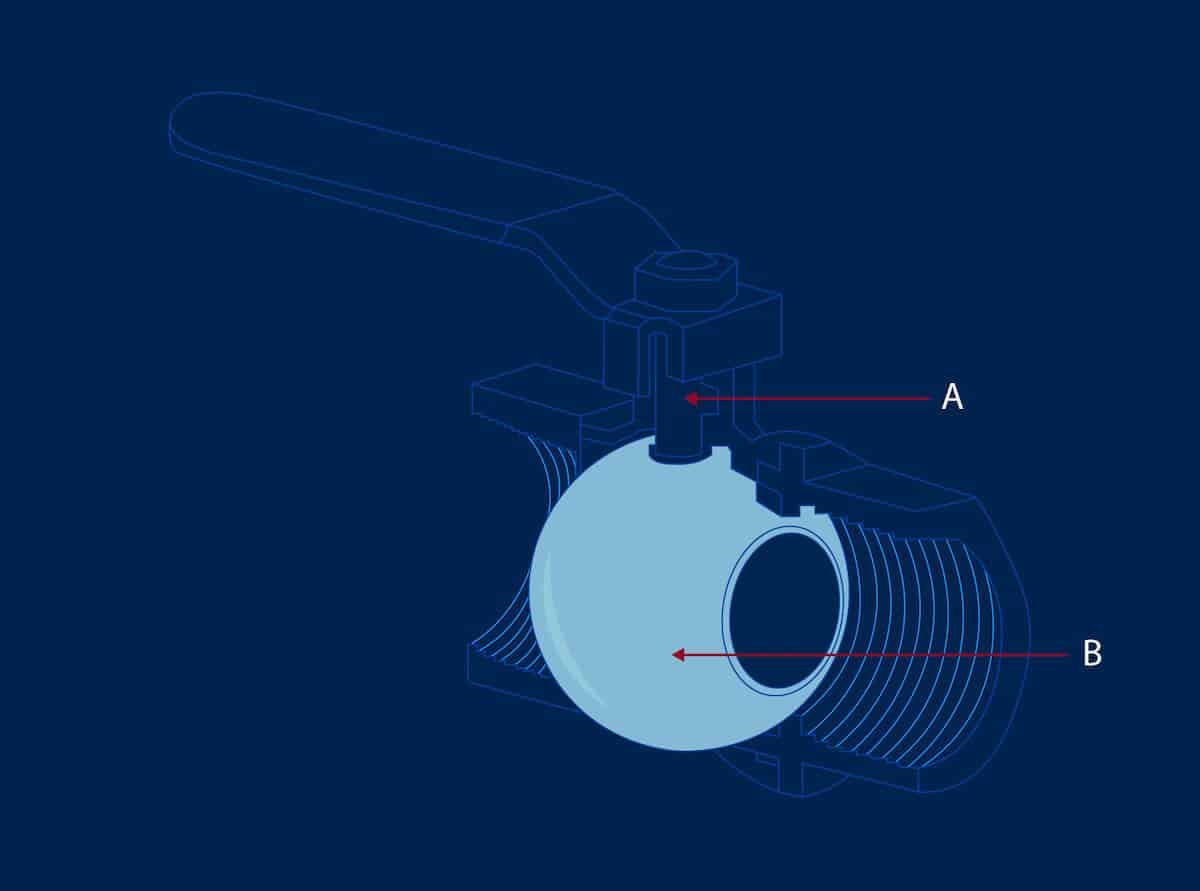
Since ball valves only require a 90° turn to control the position of the ball, they are a faster option for on/off control than gate valves. Ball valves are available with manual or automated actuation.
Gate Valves vs. Ball Valves
As we mentioned, ball valves operate by rotating a ball 90° while gate valves are controlled by moving a gate up or down. Because of their design, ball valves can perform an almost immediate shutoff, whereas gate valves are not able to act as quickly. This makes ball valves a better choice for applications where fast cycle speed is desired.
The 90° operation of ball valves makes them faster to cycle, both manually and with an actuator. This is a benefit in most instances but can potentially cause water hammer in high-pressure applications. If the pressure is high enough, the pipe could weaken or even break, which is why users of manual ball valves should turn the levers slowly to avoid water hammer.
Applications & Use Cases
The following examples show where each valve style is commonly used.
| Gate Valve Uses | Ball Valve Uses |
Shutoff and isolation service for:
Gate valves are commonly found in older home plumbing systems. |
On/off control for specialized industries including:
Ball valves are also found in newer home plumbing systems. |
Cost
In the gate valve vs. ball valve debate, cost is a major differentiating factor. Up front, gate valves are less expensive than ball valves, but they can be more susceptible to wear and tear which means they will need repairs and replacement more frequently. Ball valves have a higher initial cost, but they are the better choice for longevity since they are more durable and highly effective at forming tight seals.
Due to their quarter-turn design and lower operating torque requirements, ball valves are also more straightforward and cost-effective to automate than gate valves. For systems requiring actuation, ball valves are often the more economical option when considering the combined cost of the valve and actuator package.
Maintenance
The design of gate valves is mechanically more complex with more wear points when cycling. This makes gate valves generally less durable than ball valves. In moderate or high cycle applications, gate valves will require routine maintenance or replacement. Most ball valves are designed to be maintenance-free and should be replaced rather than repaired. Three-piece ball valves, however, are designed so that the valve seats and seals can be easily replaced without removing the valve from service. This is why 3-piece ball valves are often used in high cycle or high pressure applications where valve seal failure is likely to occur more quickly. However, 3-piece ball valves typically come with a higher up-front cost than the more popular 1-piece or 2-piece body constructions.
Should You Use a Gate Valve or a Ball Valve?
Ultimately, the choice between a gate valve and a ball valve will depend on the application. Gate valves are best suited for applications that require infrequent operation and small installation space. Ball valves are ideal for applications that require fast cycle times, multiple ports, reliable, tight seals and/or frequent operation.
Here is a recap of what we’ve covered in this article to further assist your decision:
Type of Media
Ball valves create a reliable, tight seal, so they can be used with both liquids and gases. Gate valves are better suited for thick liquids (like oil) since they are more prone to leaking.
Space
Ball valves are smaller than gate valves, but they require more space for operation. A manual ball valve requires a lever that can turn 90° but a manual gate valve can operate with a small handwheel. Some ball valves are available with small form factor handle options, such as wing or round-style handles. These handles work well with smaller pipe sizes but often do not provide enough leverage for larger ball valves.
Application
Gate valves are recommended for liquid media applications that require infrequent operation. Ball valves are used across a variety of industries that require active, quick control of the flow of media.
Ports
Unlike ball valves, gate valves are not widely available in multi-port configurations. If your application requires a multi-port flow pattern, a ball valve may be the right choice.
—
Gemini Valve designs, manufactures and distributes performance-engineered ball valves, including custom products. If you have questions about whether a ball valve or gate valve is right for your application, contact us here for more information or to speak with a specialist.
Gate Valves vs. Ball Valves FAQs
Which is better, a ball valve or a gate valve?
A ball valve is often the better choice when an application needs fast cycling and a dependable shutoff, while a gate valve supports applications that benefit from slow, steady operation.
Ball valves are recommended for applications involving:
- Quick on/off actuation
- Reliable sealing with liquids or gases
- Frequent cycling
Gate valves are recommended for applications involving:
- Low pressure drop
- Infrequent operation
- Gradual opening and closing
When should you avoid using a ball valve?
A ball valve is not the right choice when the system needs controlled or gradual flow adjustment rather than simple on/off service.
Avoid using a ball valve when the application involves:
- Throttling or steady flow regulation
- Partially open positions that may cause internal wear
- High-pressure environments where rapid manual operation can create water hammer
When is it best to use a gate valve?
A gate valve is well suited for applications that depend on slow, linear movement and a clear, full-port passage.
Gate valves work particularly well in:
- Large pipelines that need minimal flow restriction
- Systems that do not cycle frequently
- Applications involving heavier media where a gradual closure is preferred
What materials are ball valves and gate valves typically made from?
Ball valves and gate valves are most commonly manufactured from brass, stainless steel, carbon steel and bronze and the appropriate choice depends on the operating conditions.
Material selection is informed by:
- Corrosion resistance requirements
- Media compatibility
- Pressure and temperature demands
Can ball valves be used for throttling or flow control?
A standard ball valve should not be used for throttling because its internal geometry does not support stable or predictable flow control at partial openings.
For systems that need controlled flow, consider using:
- A globe valve
- A needle valve
- A v-port ball valve when suitable for the application
How do I know which valve type is right for my application?
Selecting the right valve depends on the media, operating conditions and performance requirements of the system.
A ball valve may be the better option when the application calls for:
- Fast cycle times
- Tight shutoff
- Frequent operation
A gate valve may be the better option when the application calls for:
- Slow, steady actuation
- Minimal flow resistance
- Full-port performance in larger lines
George Packard
Vice President of Marketing
George Packard, Vice President of Marketing at Gemini Valve, has been involved in Technical Sales and Marketing in the valve industry for over 10 years. George’s varied experience includes communicating with clients to troubleshoot critical applications, and working alongside top engineers in the industry to promote the latest innovations in automated ball valve design.
Elevate Your Professional Insight on Valve Selection
Our comprehensive eBook provides a deep understanding of valve types, selection criteria and industry applications. Equip yourself with the best.