Needle Valves: Design, Applications and Benefits

George Packard
Vice President of Marketing
Read Full Bio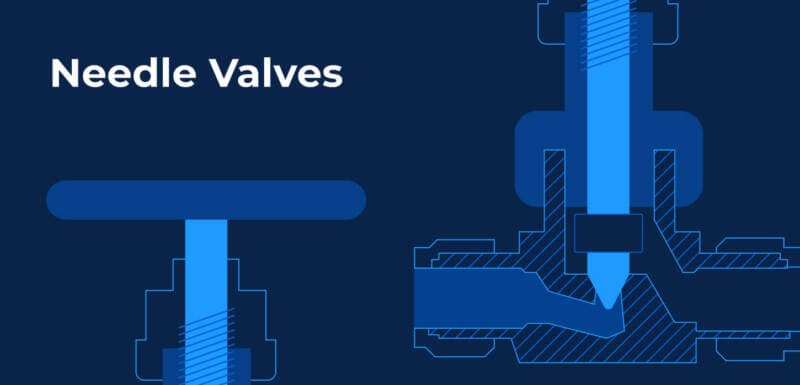
While ball valves are often the go-to choice for quick on/off flow control, sometimes you need a valve that provides more precise adjustments over time. That’s where needle valves come in. Designed for fine-tuned regulation, needle valves are ideal when you need to control flow with pinpoint accuracy, especially in high-pressure or low-flow applications (where the fluid flow rate is minimal).
Introduction to Needle Valves (+ How They Work)
Needle valves are precision-engineered flow control valves designed for low-flow applications in which fine adjustments are critical. Their defining feature is a long, tapered, needle-like stem that gradually opens or closes an orifice as the valve is turned. This allows for highly controlled regulation of fluid or gas flow, preventing sudden pressure drops and ensuring smooth operation.
When the handwheel of the valve is rotated, the stem moves up or down, adjusting the size of the opening and modulating the flow rate with extreme accuracy. This makes needle valves ideal for applications requiring precise throttling, such as gas and fluid metering in industrial, laboratory and instrumentation settings.
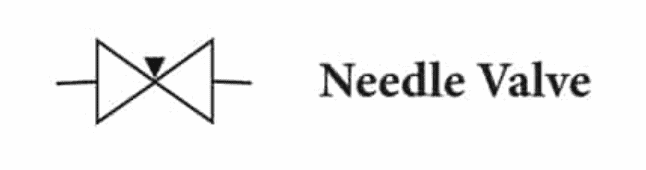
In piping and instrumentation diagrams (P&IDs), needle valves are represented by this symbol:
Typically made from materials like stainless steel, brass and other corrosion-resistant alloys, needle valves are durable and reliable in a wide range of physical environments. However, due to their design, they are not suited for high-flow or rapid shut-off applications. Instead, they are ideal in scenarios that require gradual flow adjustments, making them a key component in many industries.
Key Features of Needle Valves
Unlike standard valves designed for quick on/off operation, needle valves are specifically built for fine flow control. Their threaded stem allows for gradual adjustments by rotating the handwheel, making them ideal for applications requiring accurate throttling. To ensure a secure seal and prevent leaks, needle valves typically include a bonnet, packing and a seat.
They are available in both straight and angle body designs to accommodate different piping configurations. Their compact size makes them well-suited for instrumentation and small-diameter piping systems, and many models include a locking mechanism to maintain a set flow rate.
The following materials are frequently used in needle valve fabrication:
- Brass: Common for low-pressure, non-corrosive applications such as water and oil
- Stainless steel: Offers high corrosion resistance and durability for industrial applications
- Alloy steel: Provides enhanced strength and resistance to extreme temperatures and pressures
- Titanium: Used in highly corrosive environments, such as chemical processing and marine applications
- Monel and Hastelloy: Monel (nickel and copper) and Hastelloy (nickel, chromium, iron and molybdenum) are specialty alloys designed for extreme chemical and temperature resistance
Types of Needle Valves
Needle valves come in various designs to accommodate different flow control needs, pressure ranges and installation requirements. While all needle valves operate on the same basic principle, variations in design allow them to perform optimally in specific applications. Here are some of the most common types:
- Single needle valve: The standard design with a straight flow path, commonly used for precise flow control in low- to medium-pressure applications. This type is ideal for systems that require gradual adjustments rather than quick shut-off.
- Angle needle valve: Features a 90-degree angle between the inlet and outlet, making it suitable for installations with limited space or where a directional flow change is necessary. This design helps optimize piping layouts while maintaining precise control.
- High-pressure needle valve: Engineered to withstand extreme pressure, these valves are commonly found in hydraulic systems and high-pressure gas applications. They are built with reinforced materials to ensure durability and safety under demanding conditions.
- Instrument needle valve: Specifically designed for instrumentation and control systems, these valves regulate small flow rates with high accuracy. They are often used in analytical equipment, laboratory settings and industrial process monitoring.
- Mid-turn needle valve: Designed for enhanced precision, this type allows for finer flow adjustments over a broader range of motion. The balanced stem design improves control accuracy, making it ideal for applications that require exceptionally fine throttling.
Common Applications of Needle Valves
Due to their precise flow control capabilities, needle valves are used across a wide range of industries that require accurate regulation of liquids and gases. Their ability to finely adjust flow rates makes them essential in applications where maintaining consistent pressure and volume is critical. Below are some of the most common industries and use cases for needle valves:
- Oil and gas industry: Used in wellheads, pipelines and refining processes to precisely control the flow of oil and gas. They help maintain pressure stability and optimize operational efficiency.
- Chemical processing: Control the flow of corrosive and high-purity fluids in chemical plants, ensuring safe and efficient processing of volatile or sensitive substances.
- Power generation: Help regulate steam, fuel and cooling water flow in power plants, contributing to the efficiency and safety of turbines, boilers and cooling systems.
- Hydraulic systems: Ensure precise control of fluid movement in industrial and mobile hydraulic equipment, improving performance and reducing wear on components.
- Instrumentation and measurement: Used in pressure gauges, flow meters and analytical instruments to enable accurate readings and precise adjustments in laboratory and industrial settings.
- Aerospace and defense: Regulates fuel, hydraulic and pneumatic systems in aircraft and military applications to ensure reliable performance in extreme conditions.
- Water treatment: Controls the flow of chemicals and filtration processes in municipal and industrial water systems to help maintain proper treatment and distribution of clean water.
- Medical and laboratory equipment: Provides fine flow adjustments in medical devices and laboratory testing systems, ensuring accuracy in diagnostic procedures and fluid dispensing.
Advantages and Disadvantages of Using Needle Valves
While needle valves offer exceptional precision and control, they are not suited for every application. Understanding their benefits and limitations can help determine if they are the right choice for a specific system.
Advantages
- Precise flow control: Allow for accurate regulation of fluid flow, making them ideal for applications that require fine adjustments.
- Leak-tight sealing: Designed to provide a tight seal, reducing the risk of leaks even in high-pressure systems.
- Durability: Constructed from robust materials like stainless steel and alloy steel to withstand harsh conditions and long-term use.
- High-pressure capability: Suitable for applications requiring control of high-pressure fluids and gases without compromising performance.
- Versatility: Available in various designs, sizes and materials to accommodate a wide range of industrial and commercial applications.
- Compatible with corrosive fluids: Options in materials like stainless steel and titanium allow safe handling of aggressive chemicals and corrosive substances.
Disadvantages
- Limited flow capacity: The small orifice size restricts flow, making them unsuitable for applications requiring high flow rates.
- Slow operation: Requires multiple turns to fully open or close, which may not be practical for situations needing quick shutoff.
- Higher pressure drop: The design can cause a significant reduction in pressure, potentially affecting overall system efficiency.
- Potential for clogging: The small passageways can become obstructed by debris, requiring regular maintenance to ensure proper function.
- Not ideal for frequent operation: Frequent adjustments can lead to wear on the needle and seat, eventually causing leaks and reducing valve longevity.
How to Select A Needle Valve
Selecting the right needle valve is critical to ensuring precision control, efficient system operation and long-term reliability. Whether you’re managing fluid flow in an industrial application, controlling gas flow in a laboratory setup or regulating pressure in a hydraulic system, the right choice depends on your specific application requirements.
Here’s what to consider when choosing a needle valve:
- Application requirements: Determine whether the valve will be used for gas, liquid or steam flow and if precise flow control is necessary for the system.
- Pressure rating: Select a valve that can withstand the maximum operating pressure of your system to prevent failure or leakage.
- Temperature range: Choose materials and seal types that can handle the temperature extremes of the application without degrading over time.
- Material compatibility: Ensure the valve material (e.g., brass, stainless steel, alloy steel or titanium) is resistant to the fluid or gas being controlled to prevent corrosion or contamination.
- Flow rate and orifice size: Match the orifice size to the desired flow capacity and pressure drop requirements to maintain efficiency.
- Connection type: Select the appropriate connection style — threaded, flanged or welded — based on system design and installation constraints.
- Automation requirements: Decide whether a manual or automated needle valve is needed, depending on the level of system control and automation required.
- Environmental factors: Consider external conditions such as exposure to corrosive chemicals, extreme temperatures or harsh weather, which may impact valve performance.
- Maintenance accessibility: Opt for a valve design that allows for easy inspection and replacement of components to minimize downtime and servicing costs.
- Budget considerations: Balance performance requirements with cost constraints to select the most cost-effective valve without compromising quality or durability.
Investing in the right valve up front can save you from costly maintenance, downtime and performance issues later on. To discuss the best valve options for your next project, get in touch with the experts at Gemini Valve today.
Frequently Asked Questions
How does a needle valve work in controlling fluid flow?
A needle valve regulates fluid flow by using a slender, tapered needle-like stem that moves up and down inside the valve body. When the handwheel is turned, the stem gradually opens or closes the small orifice, allowing for precise control of flow rate. This fine adjustment capability makes needle valves ideal for applications requiring accurate throttling rather than quick on/off operation.
What is the needle valve symbol?
In engineering diagrams and P&IDs (piping and instrumentation diagrams), a needle valve is typically represented by a standard valve symbol with a small arrow or tapered line, indicating its ability to finely control flow. The exact design may vary slightly depending on industry standards, but it generally includes a straight or angled body with a diagonal line representing the needle-like stem.
What is the role of a needle valve in a carburetor?
In a carburetor, the needle valve controls the flow of fuel into the float chamber. As the fuel level changes, the float rises or falls, adjusting the position of the needle valve to maintain the correct fuel-to-air ratio. This ensures the engine operates smoothly by preventing fuel overflow or starvation, which can affect combustion efficiency.
What is a hydraulic needle valve?
A hydraulic needle valve is designed for high-pressure fluid control in hydraulic systems. It allows for precise regulation of hydraulic fluid flow, which is crucial for controlling actuator speed, pressure modulation and system stability. These valves are built to withstand extreme pressures and are commonly used in industrial machinery, heavy equipment and power transmission systems.
What is a float needle valve?
A float needle valve is a type of needle valve used in fuel systems, carburetors and fluid reservoirs to regulate flow based on liquid level. It operates in conjunction with a float mechanism, which raises or lowers the needle to open or close the valve as needed. This automatic control helps maintain proper fluid levels and prevents overfilling or depletion.
George Packard
Vice President of Marketing
George Packard, Vice President of Marketing at Gemini Valve, has been involved in Technical Sales and Marketing in the valve industry for over 10 years. George’s varied experience includes communicating with clients to troubleshoot critical applications, and working alongside top engineers in the industry to promote the latest innovations in automated ball valve design.