Understanding Solenoid Valves: What They Are and How They Work

George Packard
Vice President of Marketing
Read Full Bio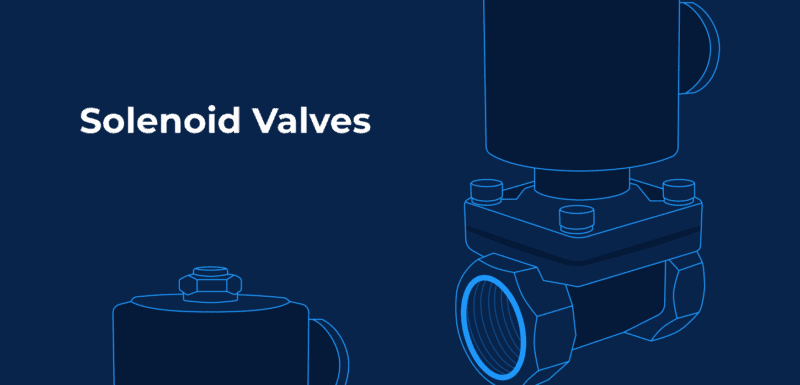
Solenoid valves are crucial in modern industrial and commercial systems, where they enable the precise, automated control of fluid or gas media flow. From HVAC systems to automotive engines, these versatile components enhance efficiency and reliability. In this guide, we’ll break down what they are, how they work and the key considerations for selecting the right one for your application.
What Is a Solenoid Valve? [+ How It Works]
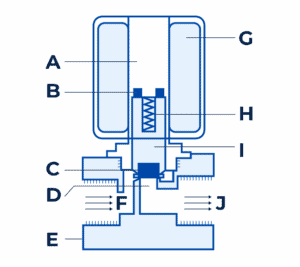
A solenoid valve is an electromechanically operated device that controls fluid or gas flow. It acts as an automated switch — using an electromagnetic solenoid coil to shift between open or closed positions — providing precise control at the push of a button or through pre-programmed signals.
Solenoid valves consist of:
- Solenoid coil: Generates a magnetic field when energized, which moves the plunger.
- Plunger or armature: A metal rod that opens or closes the valve by moving within the coil.
- Spring: Ensures the plunger returns to its default position (open or closed) when de-energized.
- Valve body: Houses the internal components and provides the flow path.
- Inlet port: Allows fluid or gas to enter the valve.
- Outlet port: Channels fluid or gas out of the valve to the next part of the system.
- Seal: Prevents leaks by tightly enclosing the flow paths when the valve is closed.
- Orifice: The opening through which fluid or gas flows, controlled by the plunger’s movement.
- Shading rings: Stabilize the plunger’s operation in AC-powered solenoids, reducing vibration and noise.
Materials Used in Solenoid Valve Construction
Solenoid valve materials are selected to meet the demands of their applications, offering properties like durability, chemical resistance and thermal tolerance. Here’s a list of commonly used materials and their benefits.
| Material | Advantages |
| Stainless Steel | Exceptionally strong and corrosion-resistant; ideal for handling aggressive media or high-pressure environments. |
| Brass | Versatile and cost-effective; widely used for general-purpose applications; performs well in non-corrosive environments. |
| Plastic (e.g., PVC, PTFE) | Lightweight and highly resistant to chemical corrosion, making it suitable for applications involving acids, alkalis or other harsh chemicals. |
| Cast Iron | Provides durability and strength; typically used in systems requiring robustness at lower costs. |
| Aluminum | Lightweight and resistant to oxidation; commonly employed in pneumatic and low-pressure systems. |
| Copper | Excellent thermal conductivity; often used in specialized applications where heat transfer is a factor. |
| Rubber (NBR, EPDM, Viton) | Essential for seals and gaskets, these materials enhance the valve’s ability to contain a wide range of fluids or gases without leakage. Each rubber type is suited to specific media and temperature ranges:
|
| Ferro-Magnetic Materials | Used in the solenoid’s construction to enhance magnetic field strength, ensuring reliable operation. |
Types of Solenoid Valves
Solenoid valves come in a variety of designs to suit specific system needs, from simple on/off control to complex flow management. Choosing the right type depends on what you need as far as the operating mechanism, mode and circuit configuration are concerned.
Based on Operation
Solenoid valves can be categorized by how they operate to control flow, whether directly through solenoid action or by using system pressure:
| Operation Type | Description |
| Direct-Acting Solenoid Valves | The solenoid directly opens or closes the valve without assistance from system pressure; ideal for low-flow, low-pressure applications. |
| Pilot-Operated Solenoid Valves | Use system pressure to assist in valve actuation; common in high-flow or high-pressure systems. |
Specialized Solenoid Valve Types
In addition to general configurations, specific solenoid valves are tailored for particular applications:
| Type | Description |
| Water Solenoid Valves | Used in irrigation, water treatment and plumbing systems, these valves manage high flow rates with reliability and efficiency. |
| Hydraulic Solenoid Valves | Found in industrial machinery, construction equipment and automotive systems, these valves control high-pressure hydraulic fluid for precise actuator and cylinder operation. |
| Purge Solenoid Valves | Essential in automotive systems, these valves regulate fuel vapor flow from the charcoal canister to the engine, reducing emissions and improving efficiency. |
| Variable Valve Timing Solenoids | Critical in modern engines, these solenoids optimize valve timing to improve performance, fuel efficiency and adaptability to varying conditions. |
| Electric Solenoid Valves | Used in HVAC, medical devices and automation, these valves offer precise control and compatibility with common voltages like 12V and 24V. |
Based on Operating Mode
Operating modes define how the valve behaves in its default state or how it responds to electrical signals, offering varying levels of functionality and energy efficiency:
| Mode | Description |
| Normally Closed (NC) | Prevents flow by default and opens when energized; ideal for applications where flow must stop during power loss. |
| Normally Open (NO) | Allows flow by default and closes when energized; suitable for systems requiring constant flow without power. |
| Universal Mode | Configurable as either NC or NO, offering flexibility for systems with changing operational needs. |
| Latching Mode (Bi-Stable) | Maintains open or closed state after a brief power pulse; ideal for minimizing energy use in intermittent power systems. |
| Proportional Control | Regulates flow based on input signals, enabling precise adjustments for fine-tuned control in systems like chemical dosing or HVAC. |
Based on Circuit Configuration
The circuit configuration determines the number of flow paths and how the valve directs fluid or gas through the system:
| Circuit Type | Description |
| Two-Way Valve | Simple design with one inlet and one outlet for controlling flow in a single path. |
| Three-Way Valve | Diverts flow between two outlet paths or switches between media. |
| Four-Way and Five-Way Valves | Controls multiple pathways, commonly used in pneumatic actuators. |
Did you know? Engineers rely on solenoid valve symbols in schematics to understand circuit types. A two-way valve is shown as a single flow path, while three-way and five-way valves use symbols with multiple outlets. These visuals help ensure proper installation and maintenance.
Advantages and Disadvantages of Solenoid Valves
Understanding solenoid valve benefits and limitations can help you determine whether a solenoid valve is suited for your system and what challenges you might need to mitigate.
| Advantages | Disadvantages |
|
|
Common Industries/Applications Utilizing Solenoid Valves
From controlling refrigerant flow in HVAC systems to automating critical processes in the pharmaceutical sector, their applications are as varied as the industries they serve. Here’s a closer look at several common solenoid valve use cases.
| Industry/Application | Use Case |
| HVAC Systems | Control refrigerants, airflow and fluid distribution for efficient heating, ventilation and air conditioning systems |
| Water Treatment and Irrigation | Regulate flow in filtration systems, municipal water plants and agricultural irrigation setups |
| Automotive | Used in fuel injection systems, emissions control and advanced engine management |
| Medical and Pharmaceutical | Deliver precise doses of fluid or gas in medical devices and maintain sterile environments in pharmaceutical production |
| Food and Beverage Processing | Handle fluids like steam, water or cleaning agents in hygienic and sanitary applications |
| Manufacturing and Industrial Automation | Control machinery and processes in assembly lines, robotic systems and other automated environments |
| Oil and Gas | Ensure safe and efficient control of high-pressure hydrocarbons in upstream, midstream and downstream operations |
| Power Generation | Manage cooling systems, steam generation and other critical processes in power plants |
| Chemical Processing | Handle corrosive, high-pressure or high-temperature media in chemical production and storage facilities |
| Aerospace | Support fuel control, hydraulic systems and environmental controls in high-precision aerospace applications |
Approval Process and Compliance Considerations
Installing solenoid valves in industrial systems involves adhering to rigorous approval and compliance requirements. These ensure that the valves meet safety, environmental and operational standards while reducing liability and ensuring system integrity.
Why Is Approval Necessary?
Approval processes ensure that solenoid valves function safely and reliably within their intended applications. Here are some of the key considerations and why they matter:
- Safety assurance ensures system reliability and reduces risks to personnel and equipment.
- Regulatory compliance guarantees adherence to regional and international standards.
- Performance reliability confirms the valve functions effectively under conditions like pressure and temperature.
- Material compatibility prevents corrosion or degradation by verifying media suitability.
- Environmental protection reduces impact by meeting eco-friendly regulations.
- Liability and insurance mitigate risks associated with product failures and ensure coverage requirements are met.
- System integrity ensures seamless integration without compromising performance.
- Electrical safety verifies compliance with electromagnetic standards to avoid interference or failures.
6-Step Approval Process
Approval involves comprehensive testing and documentation to meet industry standards. Here’s a step-by-step look at the process:
- Obtain Certifications: Work with recognized standards organizations like Underwriters Laboratories, Canadian Standards Association or Conformité Européenne (CE) to ensure the valve meets safety and quality benchmarks.
- Conduct Performance Testing: Validate that the valve can reliably operate under its specified pressure, temperature and media conditions.
- Assess Material Compatibility: Analyze the interaction between valve materials and the media to prevent issues like corrosion or leakage.
- Verify Electromagnetic Compatibility (EMC): Ensure the valve can function in environments with potential electromagnetic interference without disruption.
- Field Trials or In-Situ Testing: Test the valve in real-world conditions to confirm its reliability and performance.
- Document Manufacturing and Testing: Maintain detailed records of manufacturing processes, quality checks and testing results for traceability and quality assurance.
Compliance Requirements
Compliance ensures that the valve aligns with industry-specific and environmental standards.
Key compliance factors include:
- Industry Regulations: Adhere to specialized standards such as those from the United States Food and Drug Administration for food and beverage applications or ATEX for explosive atmospheres.
- Environmental Standards: Meet directives such as RoHS (Restriction of Hazardous Substances) and REACH (Registration, Evaluation, Authorisation and Restriction of Chemicals) for material safety.
- Pressure Equipment Certification: Ensure the valve complies with the Pressure Equipment Directive (PED) for use in European systems.
- Environmental Impact Regulations: Address waste disposal and end-of-life recycling requirements to minimize ecological footprints.
- Regular Audits: Conduct ongoing compliance checks to adapt to evolving regulations and maintain adherence to standards.
How to Choose a Suitable Solenoid Valve
A structured approach to valve selection can save time, reduce costs and ensure long-term system efficiency.
To choose the best solenoid valve for your application, follow these steps:
- Determine Application Requirements
Assess the system’s needs, including media type (e.g., liquid, gas or steam), flow rate, pressure and temperature. This narrows the range of suitable valves. - Select Valve Type
Choose direct-acting valves for low-flow systems or pilot-operated valves for high-pressure applications. Consider the configuration (e.g., two-way or three-way) based on flow control needs. - Assess Operating Mode
Match the valve’s mode — NC, NO, Universal, Latching or Proportional Control — to your system’s power, efficiency and flow requirements. - Check Material Compatibility
Ensure valve materials resist corrosion and match media demands. For example:- Stainless steel is ideal for corrosive or high-pressure media
- Brass suits general-purpose applications
- Plastic materials like PVC are excellent for chemical resistance
- Verify Power Supply
Confirm the valve’s voltage and current needs align with your system. Popular options include 12V, 24V or 110/220V. - Evaluate Response Time
Select fast-acting valves for automation and high-cycle systems; slower-response models work for stable applications. - Consider Environmental Conditions
Account for factors like extreme temperatures or exposure to dust and moisture, which may require specialized materials or enclosures. - Check for Certifications
Ensure the valve meets industry standards like FDA for food-grade use, CE for electrical safety or ATEX for explosive environments. - Review Maintenance Requirements
Opt for valves with features like modular designs or self-cleaning mechanisms to simplify upkeep and reduce downtime. - Consult with Manufacturers
Work with trusted suppliers like Gemini Valve for expert recommendations and tailored solutions.
Solenoid valves are indispensable across industries, offering precise control and reliability for fluid and gas systems. Choosing the right valve ensures efficiency, safety and compliance. For expert guidance and innovative solutions, rely on Gemini Valve. Download our free guide, Valve Sizing 101, and take the next step toward optimizing your operations.
Frequently Asked Questions
How do I determine the appropriate voltage and current for a solenoid valve?
Choose a voltage that matches your system’s power supply, such as 12V DC, 24V DC or 110/220V AC. Check the valve’s datasheet for current requirements and ensure your system can provide adequate power. For energy-saving applications, consider latching solenoid valves.
What is the typical lifespan of a solenoid valve?
Most solenoid valves last from 1 million to 10 million cycles, depending on operating conditions, cycle frequency and media type. Proper maintenance and selecting compatible materials can extend lifespan, especially for high-cycle applications.
What maintenance practices should be followed for solenoid valves?
Regularly clean the valve to remove debris, inspect seals for wear or leakage and test functionality. Use upstream filters in systems prone to fouling to reduce clogging risks.
What certifications and standards should I look for in solenoid valves?
Look for certifications such as UL or CSA for electrical safety, CE for European standards, FDA or NSF for food-grade materials and ATEX for explosive environments. Ensure compliance with RoHS and REACH for environmental safety.
George Packard
Vice President of Marketing
George Packard, Vice President of Marketing at Gemini Valve, has been involved in Technical Sales and Marketing in the valve industry for over 10 years. George’s varied experience includes communicating with clients to troubleshoot critical applications, and working alongside top engineers in the industry to promote the latest innovations in automated ball valve design.