Recently Viewed
You haven’t configured any products yet.
We’ll save your past configurations here temporarily, be sure to save them using the “Save for Later” links.
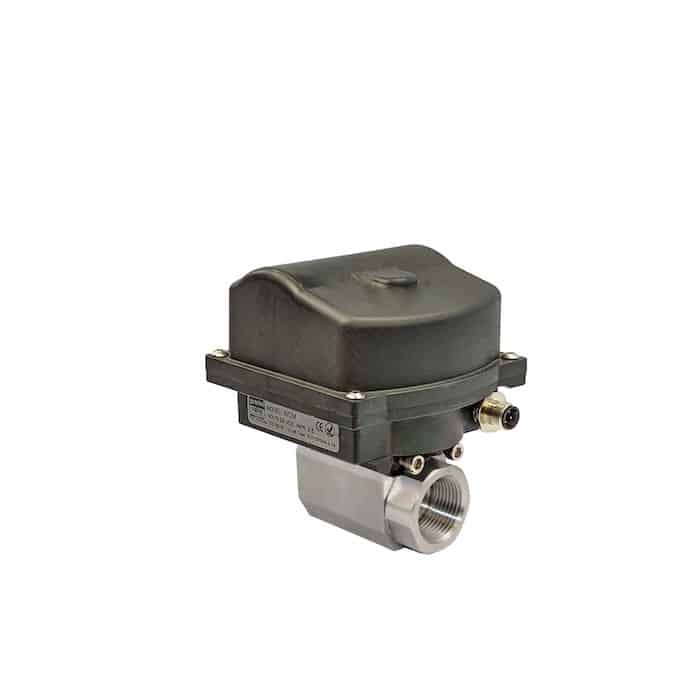
2 way ball valve

2-Way Ball Valves Made in the USA

Factory-Direct 2-Way Ball Valve Solutions for Reliable On/Off Control

Gemini Valve designs and manufactures 2-way ball valves for quarter-turn shutoff in industrial and OEM systems. Built in the USA and supplied factory-direct, our valves provide consistent sealing performance and dependable mechanical operation across a wide range of controlled media applications.

Available in sizes from ¼” to 2”, our 2-way ball valves are offered in manual, pneumatic and electric configurations. Standard body materials include brass, 316 stainless steel and carbon steel to support diverse pressure, temperature and media compatibility requirements.

What Is a 2-Way Ball Valve?
A 2-way ball valve is the most commonly specified configuration for on/off flow control. Its two-port design allows media to pass directly through the valve body when open and provides positive shutoff when rotated 90 degrees to the closed position.

Because of this simple geometry, 2-way ball valves are widely selected for applications where full isolation is required and flow diversion is not needed.

When specifying a 2-way ball valve, engineers should evaluate:

  • Media compatibility
  • Maximum working pressure
  • Allowable differential pressure
  • Temperature range
  • Required flow coefficient (Cv) and flow rate
  • Thread type (NPT vs. BSP)
  • Cycle frequency and actuation requirements

Careful alignment between these variables helps ensure consistent sealing, stable torque performance and predictable service life.

By concentrating on compact ball valve designs, Gemini prioritizes precision machining, actuator integration and practical manufacturability for OEM and industrial applications.
Contact Sales: 603-244-7931

Certified by National Safety Standards

Jump To:
  • 2-Way Ball Valve Assemblies
  • Engineering & Procurement Quick Specs
  • When to Use a 2-Way Ball Valve
  • Why Engineers and OEMs Choose Gemini Valve
  • Features of Our 2-Way Ball Valves
  • Custom 2-Way Ball Valve Solutions
  • Frequently Asked Questions

2-Way Ball Valve Assemblies

Browse our complete selection below, featuring brass, stainless steel and carbon steel models in sizes from ¼” to 2”. Manual, pneumatic and electric actuated configurations are assembled and tested in-house at our New Hampshire facility.

Items 85-96 of 4987

Set Descending Direction
  • 1" NPT Brass Double Acting Pneumatic Actuated Ball Valve With Solenoid Valve View Product
    View Product
  • 1-1/4" NPT Brass Double Acting Pneumatic Actuated Ball Valve With Solenoid Valve View Product
    View Product
  • 1-1/2" NPT Brass Double Acting Pneumatic Actuated Ball Valve With Solenoid Valve View Product
    View Product
  • 2" NPT Brass Double Acting Pneumatic Actuated Ball Valve With Solenoid Valve View Product
    View Product
  • 1/4" NPT Brass Double Acting Pneumatic Actuated Ball Valve With Solenoid Valve View Product
    View Product
  • 3/8" NPT Brass Double Acting Pneumatic Actuated Ball Valve With Solenoid Valve View Product
    View Product
  • 1/2" NPT Brass Double Acting Pneumatic Actuated Ball Valve With Solenoid Valve View Product
    View Product
  • 3/4" NPT Brass Double Acting Pneumatic Actuated Ball Valve With Solenoid Valve View Product
    View Product
  • 1" NPT Brass Double Acting Pneumatic Actuated Ball Valve With Solenoid Valve View Product
    View Product
  • 1-1/4" NPT Brass Double Acting Pneumatic Actuated Ball Valve With Solenoid Valve View Product
    View Product
  • 1-1/2" NPT Brass Double Acting Pneumatic Actuated Ball Valve With Solenoid Valve View Product
    View Product
  • 2" NPT Brass Double Acting Pneumatic Actuated Ball Valve With Solenoid Valve View Product
    View Product
Page
per page
When to Use a 2-Way Ball Valve

2-way ball valves are ideal for applications where simple, reliable isolation is required between one inlet and one outlet. They are typically specified when flow diversion, mixing or directional control is not necessary.

Engineers often select a 2-way ball valve when equipment requires:

  • Compact installation dimensions
  • Quarter-turn shutoff control
  • Integration with pneumatic or electric actuation
  • Low internal flow restriction
  • Stable operation under repeated cycling

Common applications include:

  • OEM equipment manufacturing. Integrated shutoff control within compact mechanical systems.
  • HVAC systems. Isolation in chilled water and heating loops.
  • Oil and gas. On/off control for compatible media in controlled pressure environments.
  • Food processing. Fluid isolation where cleanability and material compatibility are important.
  • Chemical processing. Shutoff of compatible liquids in batch or transfer operations.
  • Water treatment. Isolation and control in filtration and fluid distribution systems.
Features of Our 2-Way Ball Valves
    Made in the USA
    PTFE glass-reinforced seats
    Sizes from ¼” to 2”
    Self-compensating stem seal designs (series dependent)
    Reduced, standard and full port configurations
    High-cycle performance automation options available
    Brass, 316 stainless steel and carbon steel body options
    Manual, pneumatic and electric actuation available
    Pressure ratings up to 1,000 PSI CWP (series dependent)
    100% tested in-house before shipment
    Temperature ratings up to 400°F (seal dependent)
    OEM-ready configurations
Engineering & Procurement Quick Specs

Key specification data and configuration details include:

  • Published pressure ratings by series
  • Cv data available for flow validation
  • NPT female standard (BSPT available on select models)
  • NPTF Dryseal options
  • Electric actuator voltage options
  • Dimensional data and mounting details available
  • NSF-certified configurations available on select series

Need dimensional drawings or CAD files? 
Contact our team for immediate assistance.

Why Engineers and OEMs Choose Gemini Valve as Their 2-Way Ball Valve Supplier
Everything Under One Roof

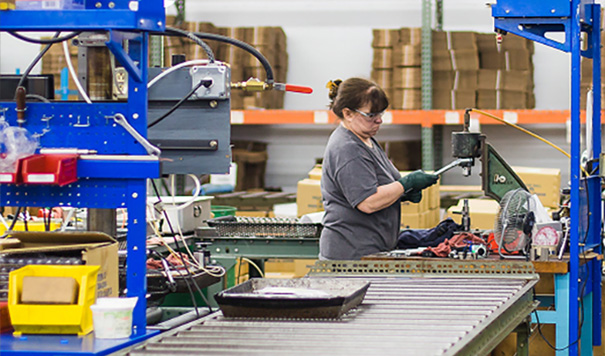
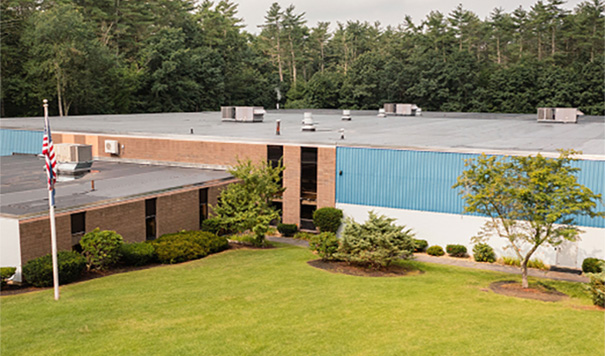
Every 2-way ball valve is designed, manufactured, assembled and tested in our New Hampshire facility. Operating under a factory-direct model enables us to maintain control over quality, lead times and engineering support without distributor layers.
When you partner with Gemini Valve, you gain:

  • 50+ years of ball valve manufacturing experience
  • U.S.-based engineering support
  • In-house actuator integration
  • Flexible OEM production capabilities
  • Predictable lead times
  • Transparent, factory-direct pricing
Need a Custom Engineered 2-Way Ball Valve? 
Let’s Build It Together
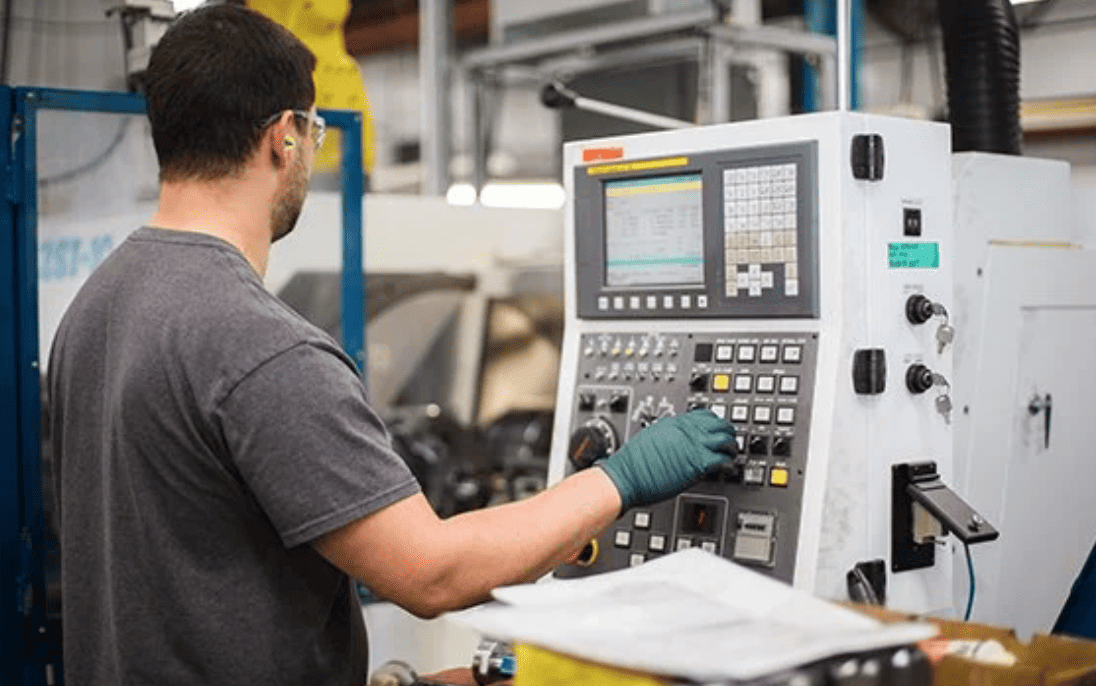
An employee wearing safety gear working on equipment in a factory

Standard configurations don’t always fit complex equipment requirements. When your application calls for something beyond the catalog, our engineering team works directly with you to evaluate operating conditions, space constraints and automation needs.

We collaborate with OEMs and industrial customers to develop practical, manufacturable solutions that align with system performance requirements. From early design discussions through final validation, our team focuses on ensuring the valve integrates cleanly into your equipment.

Ask Us About Our Custom Ball Valve Design Services

Frequently Asked Questions

  • What is a 2-way ball valve used for?

    A 2-way ball valve is used for on/off flow control between one inlet and one outlet in a piping system. It provides positive shutoff by rotating a drilled ball 90 degrees to either allow or stop media flow.
    2-way ball valves are commonly specified for isolation lines, batching systems, equipment control, drain applications and general industrial fluid handling. Because they offer tight sealing and low pressure drop, they are ideal when dependable shutoff — not flow diversion — is required.

  • What sizes are available for Gemini 2-way ball valves?

    In many corrosive or wet environments, 316 stainless steel is preferred because it generally offers stronger corrosion resistance than lower-alloy stainless options. The ideal choice still depends on the media, temperature and surrounding environment.

  • What materials are available for 2-way ball valves?

    Standard 2-way ball valve body materials include brass, 316 stainless steel and carbon steel. Seal materials typically include PTFE (glass-reinforced) and Viton®, with alternative compounds available for specific temperature or chemical compatibility requirements.
    Material selection should be based on media compatibility, operating temperature and pressure rating to ensure long-term sealing integrity and system reliability.

  • How do I choose the right 2-way ball valve for my application?

    Choosing the right 2-way ball valve requires evaluating media type, pressure, temperature, required flow rate (Cv), connection type and whether manual or automated operation is needed.
    Engineers should also consider differential pressure limits, port configuration (reduced vs. full port) and future automation needs. If you provide system specifications, our engineering team can recommend a configuration that meets performance and dimensional requirements.

  • What is the difference between a 2-way and 3-way ball valve?

    A 2-way ball valve controls flow between one inlet and one outlet for simple on/off shutoff. A 3-way ball valve includes an additional port to divert, mix, or select flow paths between multiple lines.
    If your application requires media diversion or switching between sources, a 3-way valve is typically required. If you only need isolation, a 2-way ball valve is the appropriate choice.

  • How do you maintain a 2-way ball valve?

    Maintaining a 2-way ball valve typically involves periodic inspection of stem seals, seats and actuator components to ensure proper sealing and smooth operation. In most industrial applications, minimal maintenance is required when the valve is properly sized and installed.
    For high-cycle or demanding environments, routine inspection of seals and verification of torque operation can help extend service life. Always isolate system pressure before performing any maintenance.

  • Can a 2-way ball valve be used for high-pressure applications?

    A 2-way ball valve can be used for high-pressure applications if its pressure rating and differential limits match system requirements. Gemini 2-way ball valves are available with pressure ratings up to 1,000 PSI CWP depending on the series.
    Engineers should verify both maximum working pressure and differential pressure limits before specifying a valve for high-pressure service.

Get a Quote for Your Project

For the most accurate pricing information, we’re happy to provide a quote for your specific application. In most cases, we will respond within 1 business hour!