The Future of Valve Automation: Trends, Technology & What Comes Next

George Packard
Vice President of Marketing
Read Full Bio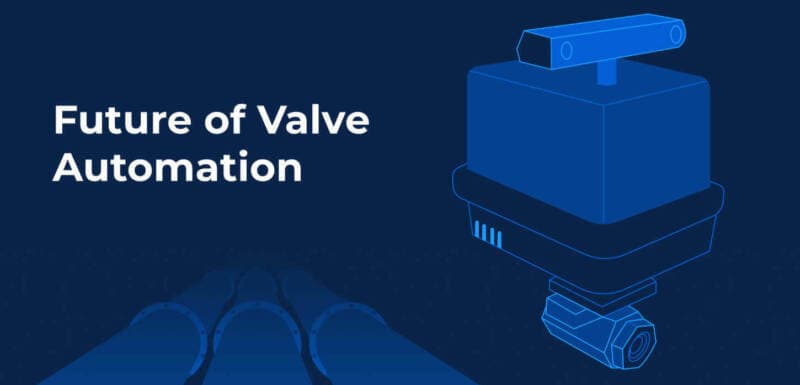
Valve automation has come a long way since the days of hand-operated levers and wheels. As industries demand greater precision, enhanced safety and smarter infrastructure, manual systems are being replaced by automated valve solutions that better meet operational and regulatory requirements.
In this article, we’ll help you understand what valve automation is, why it’s crucial in today’s industrial landscape and how Gemini Valve is supporting customers with automation solutions that integrate with modern control systems.
What Is Valve Automation?
Valve automation is the process of using control systems and actuators to operate a valve without manual input. Manual valves require a person to turn a lever or wheel. On the other hand, an automated valve can open or close based on a signal from a control system. That signal might come from a pressure sensor, flow meter or programmable logic controller (PLC).
There are two parts involved in automation:
- Actuation: This refers to the physical movement of the valve. Actuators use electric motors, compressed air (pneumatic) or fluid pressure (hydraulic) to turn the valve stem and shift the valve position.
- Control: This involves monitoring variables such as flow rate, temperature or system pressure and sending commands to the actuator based on those readings.
The actuator is the mechanical component that physically opens or closes the valve. The control system makes the decision on when and how the actuator should move.
Types of actuators include:
- Electric: Often used when precise positioning is needed or when a compressed air supply is not readily available.
- Pneumatic: Common in systems where compressed air is already used. Offers fast cycling and long service life.
- Hydraulic: Suitable for high-force applications, especially where large valves are involved.
Each type has trade-offs related to speed, power consumption, precision and ease of integration. Gemini Valve’s product line focuses on electric and pneumatic solutions for their versatility and performance in smaller valve formats.
Why Automation Is Critical in Today’s Industrial Landscape
Automating valves improves operational consistency and system performance. It reduces manual labor and makes processes easier to monitor and adjust. Here are several reasons why many industries invest in automation.
Improved Precision and Repeatability
Automated valves can hold a specific position reliably. This allows for better control over flow rate, temperature or pressure. Some systems require valves to open or close at exact intervals, and automation makes this possible without variation.
Worker Safety
Automated valves reduce the need for personnel to access hazardous or hard-to-reach areas. In high-temperature, high-pressure or corrosive environments, remote control minimizes risk.
Lower Operating Costs
Automation reduces the number of manual operations, which can cut down on labor costs and error rates. Valves can also be operated during off-hours or in remote facilities without on-site staff.
Less Downtime
Systems equipped with automated valves often include sensors that alert operators to faults. These systems can shut down sections automatically or adjust flow to prevent damage, avoiding unplanned outages.
Centralized Monitoring
Operators can observe and control multiple valves from a single location using supervisory control and data acquisition (SCADA) or PLC systems. This is especially useful in large plants or distributed systems such as water or gas pipelines.
Flexible System Design
Automated valves make it easier to scale systems. As demand grows or conditions change, additional valves and controls can be added without changing how the entire system is operated.
Environmental and Regulatory Compliance
Consistent valve operation helps maintain process control and documentation. Automated data logging supports audits, traceability and proof of compliance with safety and environmental regulations.
Each of these benefits supports more predictable operations. That predictability is a central goal in applications ranging from water treatment and HVAC to manufacturing and chemical processing.
Gemini Valve’s Approach to Valve Automation
Gemini Valve designs automated ball valves for consistent performance in systems that require tight control, compact assembly and configuration flexibility. We focus on solutions that align with specific application needs, while keeping components reliable and cost-efficient.
Smart Electric Actuators
Our Modular Electric Actuator provides precise positioning and speed control in a compact package. Designed for tight installations and variable duty cycles, this “smart” actuator can be programmed for multiple positions, supports various input and feedback signal types and can be customized to integrate with a variety of communication standards (such as CAN Bus protocol) for compatibility with modern industrial controls.
Its adjustable cycle speed — ranging from 2.7 seconds and slower — helps manage application-specific risks like water hammer. The actuator’s modular architecture allows custom control programming to be applied at the final production stage, helping reduce lead times.
Custom Engineering Capabilities
For customers whose applications require more than an off-the-shelf configuration, Gemini Valve offers custom valve solutions. Our process is built around adapting proven products to meet unique requirements in industries such as:
- Food processing
- Automotive
- Chemical processing
- HVAC
- Water treatment
- Oil and gas
Each project begins with a detailed review of the application. Whether the request involves specific materials, pressure requirements, port configurations or signal integration, our engineering team works directly with the customer to align product performance with system goals.
Customization is typically applied to a standardized actuator or valve body, which supports production efficiency while allowing final-stage modifications. For example, we can reprogram smart electric actuators in-house — even after installation — if control logic needs to change. This model supports both one-time adjustments and long-term adaptability.
To support lead time expectations and ensure quality, Gemini dedicates its custom engineering resources primarily to projects with significant volume or strategic fit. For qualified applications, we offer full design support, product testing and direct collaboration through all stages.
Emerging Trends & The Future of Valve Automation
Several developments are influencing how valve automation systems are designed, operated and maintained. These trends are shaping next-generation solutions and creating new performance benchmarks across industries.
Smart Valves with Embedded Sensors
Valves are increasingly equipped with sensors that monitor position, temperature, cycle count and other performance indicators. This data supports process oversight and enables predictive maintenance by identifying wear patterns or unusual behavior before failure occurs.
Predictive Maintenance
Rather than operating on fixed maintenance intervals, automated systems can now trigger service alerts based on actual usage and condition data. This approach helps prevent downtime and extends product life.
Wireless Communication
In remote or hazardous areas, wireless valve control systems reduce infrastructure costs and simplify installation. They eliminate the need for long conduit runs and reduce exposure to electrical hazards.
Energy Efficiency
Low-power actuators reduce electrical consumption in automated systems. As facilities adopt broader sustainability goals, energy-efficient valve solutions are being evaluated not only for performance but also for lifecycle cost impact.
Miniaturization and Compact Design
Smaller valves and actuators are required in OEM products and retrofitted systems where space is limited. This demand has led to a focus on optimizing actuator geometry and simplifying mounting hardware.
How Gemini Valve Is Responding to These Trends
Gemini Valve is actively developing products that reflect these evolving needs. Our engineering team is focused on several core areas:
- Compact actuators designed for constrained environments
- Programmable control logic and multi-position support
- Modular smart actuator platforms that can be updated post-installation
- CAN Bus and other modern communication protocol support
- Energy-efficient design to reduce operating costs
We continue to adapt our Performance Automation Series and Serviceable Series products with features that align with sensor-based maintenance, compact equipment footprints and Industry 4.0 integration.
Optimizing Control Through Better Valve Selection
Valve automation supports safer, more efficient and more responsive systems across nearly every fluid-handling industry. As automation technologies improve, the range of use cases continues to grow, from large-scale plant operations to compact OEM equipment.
Gemini Valve is helping customers meet these challenges by offering standardized solutions that can be tailored to fit specific needs, backed by direct engineering support and a commitment to reliability.
Need help selecting the right valve for your system? Explore our Valve Sizing 101 Guide or contact a Gemini Valve expert for personalized support.
Valve Automation FAQs
What is the difference between valve actuation and automation?
Actuation refers to the physical mechanism that moves the valve, such as an electric or pneumatic actuator. Automation includes both actuation and the control logic that determines when and how the valve should operate.
What types of actuators are used in valve automation?
Common valve types include electric, pneumatic and hydraulic actuators. Gemini Valve specializes in electric and pneumatic models optimized for compact and reliable operation.
What industries benefit most from valve automation?
Industries such as HVAC, water treatment, food processing, chemical processing and manufacturing benefit from automated valves for their accuracy, efficiency and remote control capabilities.
Are automated valves more expensive to maintain?
Not necessarily. While the initial investment may be higher than manual valves, automated valves often lower total cost of ownership through reduced labor, improved uptime and predictive maintenance capabilities.
Can valve automation be retrofitted to existing systems?
Yes, many systems can be retrofitted with actuators and controls, especially when valves are compatible with standard mounting interfaces.
What is a smart valve and how does it work?
A smart valve includes sensors and microcontrollers to manage valve position, speed and performance feedback. These features support integration with control networks and condition-based maintenance systems.
How does Gemini Valve support custom automation solutions?
We offer modular actuators and configurable valve assemblies. Our engineering team works directly with customers to apply specific control logic, communication protocols and performance parameters.
What factors should I consider when choosing an automated valve system?
Key considerations include media type, pressure range, flow control needs, available space, actuation method and integration requirements with control systems.
George Packard
Vice President of Marketing
George Packard, Vice President of Marketing at Gemini Valve, has been involved in Technical Sales and Marketing in the valve industry for over 10 years. George’s varied experience includes communicating with clients to troubleshoot critical applications, and working alongside top engineers in the industry to promote the latest innovations in automated ball valve design.
15 Factors to Consider Before Your Next Industrial Ball Valve Order
This guide includes everything you need to know before placing your next industrial ball valve order.