Best Pressure-Rated Valves for High-Temperature Systems: Materials, Performance & Maintenance

George Packard
Vice President of Marketing
Read Full Bio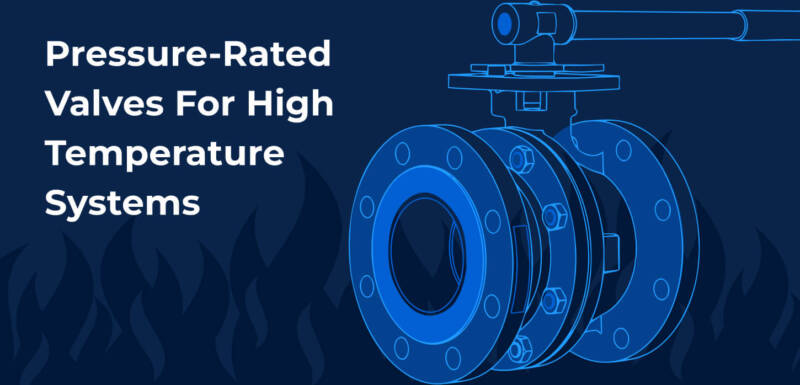
When steam systems run hot and pressures climb, every component in the line is tested. Valves are often the first place problems surface, especially if pressure ratings or materials are not aligned with the application.
Selecting the best pressure-rated valves for high-temperature systems begins with a clear understanding of what your system demands. Temperature, pressure, flow and media conditions all influence how a high-temperature valve performs over time. This guide will walk through what to look for, so you can make a confident, technically sound decision.
Assess Your System Requirements
Before you compare valve types, step back and look at what your system actually demands. High-temperature applications magnify small oversights. A valve that performs well at moderate conditions can struggle when heat and pressure increase.
Start with the fundamentals:
1. Operating Pressure and Temperature
These two factors form the backbone of valve selection. Before evaluating specific valve types, define the full range of operating conditions your system will expose valves to.
Start by confirming:
- Normal operating pressure and temperature
- Maximum startup or upset conditions
- The potential for pressure spikes during cycling
Steam systems often experience transient peaks that exceed steady-state conditions. Your high-temperature valve must be rated to handle both routine operation and those brief but critical extremes without compromising sealing performance.
2. Flow Requirements and Valve Function
Once operating limits are defined, clarify what the valve is expected to do within the system.
Consider the following:
- Is the valve used strictly for on-off isolation?
- Does the application require throttling or modulation?
- Is the valve part of an automated system with frequent cycling?
Flow rate directly affects Cv (flow coefficient) requirements, pressure drop and overall valve sizing. In high-cycle applications, repeated actuation introduces additional wear on seats and stem seals. Under these conditions, certain ball valves for high-temperature service may offer performance advantages over other designs.
3. Media and Material Compatibility
Not all high-temperature fluids behave the same, and each places different demands on valve materials.
Common media in elevated-temperature systems include:
- Saturated steam
- Superheated steam
- Thermal oils
- Aggressive process fluids
Each of these interacts differently with valve body materials, seats and seals. Steam may introduce thermal cycling stress, while certain process fluids can accelerate corrosion or degrade sealing materials. Selecting compatible materials helps maintain sealing integrity and structural stability under sustained heat.
Best Valve Types for High-Temperature Systems
Not every valve design performs equally under sustained heat and pressure. In high-temperature systems, sealing performance, material stability and pressure class become defining factors. Each design offers distinct advantages depending on the application.
Below are the most common valve types used in high-pressure, high-temperature applications and where they perform best.
Ball Valves
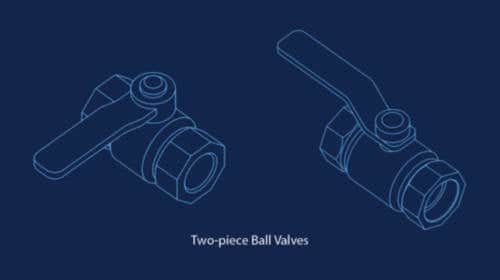
Ball valves are widely used in steam and high-temperature fluid systems because of their tight shutoff capability and compact design. In elevated-temperature environments, maintaining sealing integrity requires careful seat selection. Metal seats or reinforced PTFE seats are typically specified to withstand sustained heat and pressure. Unlike soft seats, metal-to-metal seals do not deform or ‘cold flow’ under extreme thermal stress, ensuring the valve doesn’t seize or leak when the system hits peak temperature
These valves offer fast quarter-turn operation and reliable shutoff performance, making them well suited for isolation applications. Their compact footprint and availability in sizes under two inches also make them attractive for OEM and automation-focused systems. However, soft seats may degrade as temperatures rise, and standard ball valves are not ideal for precision throttling unless specifically engineered for control service.
In high-cycle or automated applications, properly specified ball valves for high-temperature service are often preferred due to their durability and repeatable performance.
Globe Valves
Globe valves are commonly selected when throttling and precise flow control are required in high-temperature systems. Their internal design allows for accurate modulation, which makes them well suited for process control lines where regulating flow is critical.
These valves perform well under high pressure and are frequently used in steam service. The trade-off is increased pressure drop compared to other designs, along with a larger and heavier construction. Operation is typically slower than quarter-turn valves, which may limit their use in applications requiring rapid isolation.
Gate Valves
Gate valves are typically used for full-open or full-closed service in high-temperature environments. When fully open, they offer minimal pressure drop, which makes them effective for main steam lines and high-pressure isolation points.
They are not designed for throttling, and partial operation can lead to seat wear over time. Gate valves also require more actuation time and generally have a larger footprint compared to compact ball valve designs.
Butterfly Valves
Butterfly valves are often chosen for larger diameter lines where space constraints and weight considerations are important. Their lightweight construction and quick operation make them efficient for certain high-temperature applications.
However, sealing performance may be limited at very high pressures, and extreme temperature service often requires specialty materials. Careful specification is necessary to ensure long-term performance in demanding steam or process environments.
What Are the Best Pressure-Rated Valves for High-Temperature Systems?
The best pressure-rated valves for high-temperature systems depend on how the valve functions within the process. For most small-diameter industrial applications under two inches, engineers typically select from the following options.
- High-temperature ball valves with reinforced or metal seats: Ideal for isolation in steam and elevated-temperature fluid systems, especially in automated or high-cycle applications.
- Pressure-rated globe valves for throttling applications: Suitable when precise flow regulation is required under sustained heat and pressure.
- High-pressure gate valves for main line isolation: Commonly used in primary steam lines where full-open or full-closed service and minimal pressure drop are priorities.
- Metal-seated butterfly valves in appropriate pressure classes: Used in larger diameter lines where space and weight constraints are considerations, provided sealing requirements align with system pressure.
Selecting among these options requires evaluating pressure class, operating temperature, cycle frequency and media compatibility together. No single valve type fits every high-temperature application. The correct specification aligns performance demands with material capabilities and pressure ratings.
Pressure Ratings & Safety Compliance
In high-temperature applications, pressure rating is fundamental to system safety and reliability. A valve must withstand not only the operating pressure, but also the effects of elevated temperature, thermal cycling and potential surge conditions.
Every high-temperature valve is assigned a pressure class based on recognized industry standards. These ratings define the maximum allowable pressure at a given temperature.
As the temperature increases, allowable working pressure typically decreases. A valve rated for a specific pressure at ambient conditions may carry a lower rating once exposed to sustained heat. For example, a Class 150 valve rated for a certain pressure at ambient temperature may have a significantly reduced allowable pressure once operating temperatures rise into steam service ranges.
Understanding Pressure Class
Pressure class defines how much pressure a valve can safely withstand at a given temperature. In high-temperature systems, this relationship becomes critical because allowable working pressure decreases as temperature rises.
Common industrial pressure classes include the following.
- Class 150: Commonly used in moderate-pressure steam and fluid systems. Appropriate for controlled environments where both pressure and temperature remain within predictable ranges.
- Class 300: Frequently selected for industrial steam applications that require higher pressure tolerance. As operating temperature rises, this class provides additional strength compared to lower-rated valves.
- Class 600: Designed for high-pressure environments where steam or process fluids operate under sustained stress. Often used in demanding industrial systems with elevated temperature requirements.
- Class 1500: Engineered for severe service conditions involving very high pressure and temperature. These valves are specified in critical applications where structural integrity and performance are paramount.
Selecting the proper class requires evaluating the full operating envelope of the system, including:
- Maximum operating pressure
- Maximum operating temperature
- Potential startup surges or transient spikes
- Required safety margin based on plant standards
In steam systems, brief pressure spikes during startup or rapid cycling can exceed steady-state conditions. Pressure class selection must account for those events, not only normal operation.
Why Standards Matter
Pressure-rated valves used in high-temperature systems should align with recognized standards such as:
- ASME B16.34
- API 6D
- International Organization for Standardization (ISO) fire-safe and leakage certifications
These standards establish design, testing and performance requirements. Compliance confirms that the valve has been engineered and validated for demanding service conditions. For engineers and plant managers, adherence to these standards reduces uncertainty and supports consistent performance in the field.
Building in a Safety Margin
Best practice is to specify the best pressure-rated valves for high-temperature systems with capacity above normal operating requirements. Designing to the edge of a rating leaves little tolerance for real-world variability.
An appropriate safety margin helps account for:
- Thermal expansion effects
- Pressure fluctuations
- Material fatigue over time
- Unexpected downstream restrictions
When pressure class, material selection and temperature rating are aligned with both normal and upset conditions, the valve becomes a stable component within the system rather than a potential failure point.
Maintenance & Longevity Tips
Elevated temperature, pressure cycling and aggressive media accelerate component wear and place continuous stress on valve internals. A well-specified valve performs reliably, but long-term performance also depends on inspection and maintenance practices.
Below are key considerations for extending service life in high-temperature applications.
Monitor Stem Seals and Seats
Stem seals and seats are often the first components to show wear in steam and high-temperature fluid systems. Because they are directly exposed to heat, pressure and repeated actuation, these components should be inspected regularly as part of a preventive maintenance program.
During inspection, look for:
- Leakage around the stem
- Reduced shutoff performance
- Changes in operating torque
Thermal cycling can gradually affect seal compression and seating surfaces. Even small changes in performance can indicate developing wear. Identifying these signs early allows for corrective action before minor seepage progresses into more significant leakage or operational disruption.
Account for Thermal Cycling
Repeated expansion and contraction caused by temperature fluctuations can gradually affect valve performance. In high-temperature systems, these thermal cycles place stress on internal components and mechanical connections.
Over time, thermal movement can influence:
- Seat integrity
- Fastener tension
- Packing performance
Even small dimensional changes can alter sealing pressure or alignment. Periodic inspection after major temperature swings or startup cycles helps confirm that the valve continues to operate within specification and that sealing performance remains intact.
Evaluate Cycle Frequency
In automated systems, cycle count directly influences valve longevity. A valve that performs well in low-cycle service may experience accelerated wear when subjected to frequent actuation.
High-cycle applications often benefit from:
- Reinforced seat materials
- Enhanced stem sealing designs
- Automation-specific valve constructions
When selecting ball valves for high-temperature service in automated environments, cycle life should be evaluated alongside pressure and temperature ratings. A valve rated for high pressure and temperature must also be capable of sustaining repeated mechanical movement without premature wear.
Follow Manufacturer Guidelines
Installation torque, alignment and actuator mounting all influence long-term reliability. Improper installation can introduce unnecessary stress, especially in small-diameter valves under two inches.
Following manufacturer specifications for mounting alignment, torque values and differential pressure limits helps preserve sealing performance and structural integrity.
Consider Serviceable Designs
In some applications, a serviceable valve design offers long-term value. Replaceable seals and accessible internal components allow maintenance without replacing the entire assembly. This approach can reduce downtime and lifecycle cost in demanding high-temperature systems.
Consistent inspection and proactive maintenance support the performance of the best pressure-rated valves for high-temperature systems. When specification and upkeep work together, reliability follows.
Making a Confident Valve Selection
High-temperature steam and fluid systems demand careful valve selection. Pressure, temperature, flow requirements and cycle frequency all influence performance under sustained heat.
To select the best pressure-rated valves for high-temperature systems, focus on:
- Matching pressure class to both operating and peak conditions
- Confirming material compatibility with media and temperature
- Choosing the appropriate valve design for isolation or throttling
- Planning for maintenance and long-term service life
When these factors are aligned, a high-temperature valve becomes a reliable part of the system rather than a recurring maintenance concern.
At Gemini Valve, we specialize in small-diameter manual and automated ball valves engineered for demanding industrial environments. With decades of design and manufacturing expertise, our team helps engineers and OEMs specify solutions built for predictable performance and long-term reliability.
If you are evaluating pressure-rated valves for high-temperature steam or process systems, our engineering team is ready to help. We can review your application requirements, pressure class needs and automation considerations to ensure you select the right solution.
George Packard
Vice President of Marketing
George Packard, Vice President of Marketing at Gemini Valve, has been involved in Technical Sales and Marketing in the valve industry for over 10 years. George’s varied experience includes communicating with clients to troubleshoot critical applications, and working alongside top engineers in the industry to promote the latest innovations in automated ball valve design.