Plug Valve Basics: How They Work and Where They’re Used

George Packard
Vice President of Marketing
Read Full Bio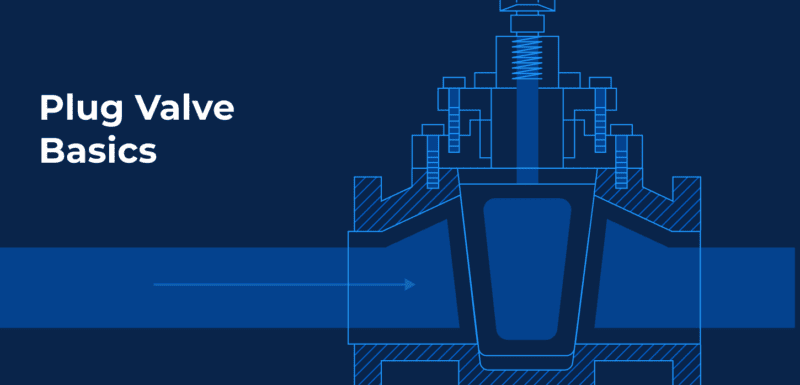
When it comes to valve selection, unfortunately, there isn’t a “one-size-fits-all” solution. Depending on your application, there are dozens of potential solutions, so identifying the right valve for your application is essential.
One such solution is known as a plug valve, also known as cock valves or spinning plug valves. Generally speaking, these valves are intended to control the on/off flow of media in a piping system. To be more precise, plug valves feature a conical, tapered, and hollow plug that rotates to enable the passage of media through a rectangular opening, known as the bore.
Think your job might call for plug valves? Read on to learn more about plug valve types, applications and how to utilize them effectively in your next project.
How Do Plug Valves Work?
Plug valves regulate the flow of media by rotating a plug with a hole through the valve body. They are quarter-turn manual valves, meaning that their full range of motion is 90 degrees. To allow for media flow, plug valves should be completely open; forcing them partially open or closed to the flow of media risks damaging the valve. For this reason, plug valves are generally not well suited to precise flow control applications.
Plug valves can be configured as either two-way or three-way controls. Two-way valves control a single flow path, while three-way plug valves allow switching between two different mixing streams. Regardless of the number of paths, these valves are best used in systems that require fast on/off media control.
3 Different Types of Plug Valves
There are three types of plug valves, but the right one for your job will largely depend on the application. The most common types are:
- Lubricated Plug Valves: These valves are designed for high temperatures and are typically made of stainless steel to hold up in high torque environments. As the name implies, lubricated plug valves provide constant lubrication to the plug to cut down on friction and protect the plug from corrosion.
- Non-Lubricated Plug Valves: Because these valves feature an elastomeric (non-metallic) sleeve between the plug and valve body, they do not require lubrication. The sleeve itself reduces friction and protects the valve from corrosion, while also providing a tight seal. Non-lubricated plug valves are not suitable for high-temp applications.
- Eccentric Plug Valves: Eccentric plug valves have an off-center plug design, which helps them perform in applications with a higher seating force with reduced friction. This also allows for better sealing and handling of slurries or media with solids, making it suitable for work with clean and dirty water, sewage, sludge and more.
Common Uses and Applications of Plug Valves
Plug valves are fast cycling, offer tight sealing capabilities and can be used in a variety of applications. The main advantage they have over ball valves is they tend to do better in applications with very abrasive or sticky media, as they do not rely on soft seals like ball valves. Because of these properties, plug valves are best suited for the following industries and applications:
- Industries:
- Oil and Gas: Because plug valves are designed to handle slurries and sludge, they are ideal for use in the oil and gas industries.
- Chemical Processing: Chemical processing industries rely on plug valves to provide bubble-tight shutoff for liquid, gas and vapor media. They are also manufactured with durable materials, so they are well-suited for corrosive and hazardous materials.
- Water Treatment: Eccentric plug valves specifically are ideal for water and sewage treatment applications due to their better sealing capabilities.
- HVAC Systems: Built to withstand high temperatures, plug valves are regularly used in heating and HVAC projects.
- Applications:
- Plug valves are incredibly versatile, making them well suited to handle a wide range of fluids, gases, vapors and slurries. They are manufactured to withstand high temperatures and can offer a leak-tight seal against corrosive media. These properties also make them ideal in applications where rapid shut-off and on-off service is required.While plug valves are very versatile, there are pros and cons to using them in certain applications.
|
Advantages of Plug Valves |
Disadvantages of Plug Valves |
| Simple design and operation | Potential for galling in non-lubricated designs |
| Quick to open and close | Higher cost in some configurations |
| Can handle high pressure and temperatures | Limited control and throttling capabilities |
Plug Valve Maintenance and Troubleshooting Tips
Plug valves experience significant wear and tear due to the nature of their intended applications. While they are made of highly durable materials and are designed to last through periods of high utilization, regular valve maintenance is still critical.
To keep your plug valves working as effectively and efficiently as possible, for as long as possible, make sure you perform the following:
- Regular Inspections: Perform periodic inspections of your plug valves to check for leaks, corrosion and excessive wear.
- Lubrication and Cleaning: For lubricated plug valves, make sure the lubrication chamber is working properly to ensure proper function, and clean away any debris.
- Troubleshooting Common Issues: Some of the most common issues that arise with plug valves are leaks, seizure and sticking. For seizure and sticking, a thorough cleaning and reapplication of lubricant can typically remedy the issue. For leaks, check for damaged seals or o-rings and replace them if necessary.
If your job requires a versatile valve solution with rapid on/off functionality, and the ability to work with sticky media or slurries or sludge, then a plug valve is likely right for you. As with any job though, it’s critical to understand the different valve types and sizes and which applications they are best suited for. The next time you’re weighing your options, check out our complimentary guide, “Valve Sizing 101.” This guide features advice from industry experts on how to properly select valves for your next project.
Plug Valve FAQs
Q: What is a plug valve?
A: Plug valves have a conical, tapered, hollow plug that rotates to allow media to pass through a rectangular passage, or bore. They are fast cycling and tend to perform better in applications with very abrasive or sticky media.
Q: What are the different types of plug valves?
A: There are three different types of plug valves — lubricated plug valves, non-lubricated plug valves and eccentric plug valves.
Q: What are plug valves used for?
A: Because of their durable properties and rapid shut-off capabilities, plug valves are primarily used in oil and gas, chemical processing, HVAC and water treatment applications.
Q: What’s the difference between a plug valve and a ball valve?
A: Plug valves and ball valves are similar, but differ across a few key properties. First, plug valves are conical or cylindrical plugs, while ball valves are shaped like a spherical disc. Secondly, operating plug valves can be more difficult due to their high torque requirements. Lastly, plug valves are generally better suited for use with abrasive slurries, while ball valves tend to provide tighter shut off and are more cost effective.
Q: How do you tell if a plug valve is open or closed?
A: The handle position will indicate whether a plug valve is open or closed. If the handle is in line with the piping, the valve is open. If the handle is perpendicular to the piping, the plug valve is closed.
George Packard
Vice President of Marketing
George Packard, Vice President of Marketing at Gemini Valve, has been involved in Technical Sales and Marketing in the valve industry for over 10 years. George’s varied experience includes communicating with clients to troubleshoot critical applications, and working alongside top engineers in the industry to promote the latest innovations in automated ball valve design.